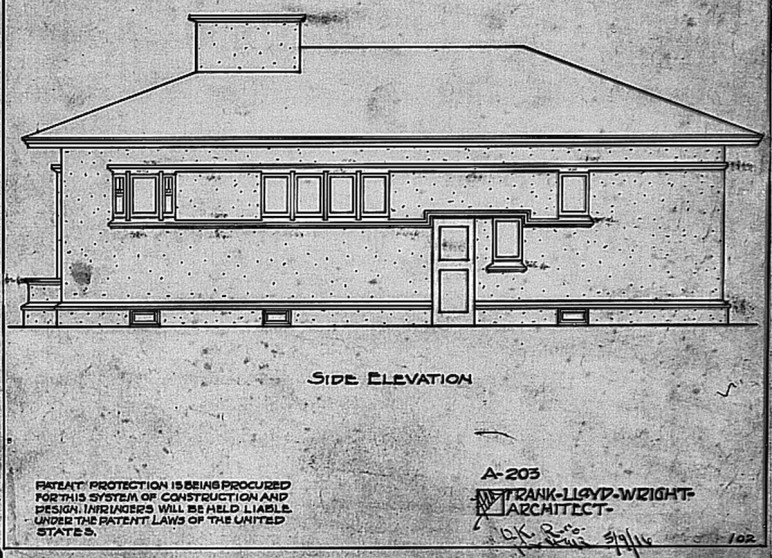
Let's stop blaming WWI and credit Frank Lloyd Wright for preventing the theft of his American System-Built Homes.
Thieves Caught Thieving
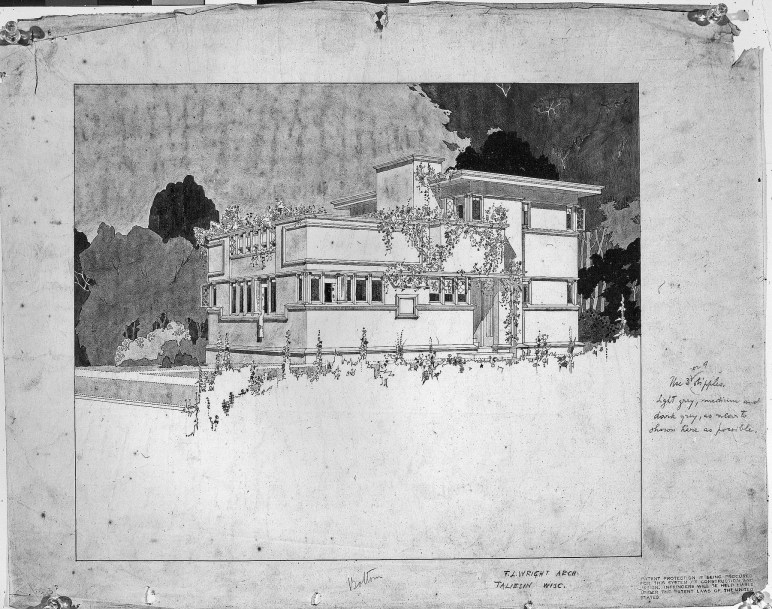
Let's stop blaming WWI and credit Frank Lloyd Wright for preventing the theft of his American System-Built Homes.
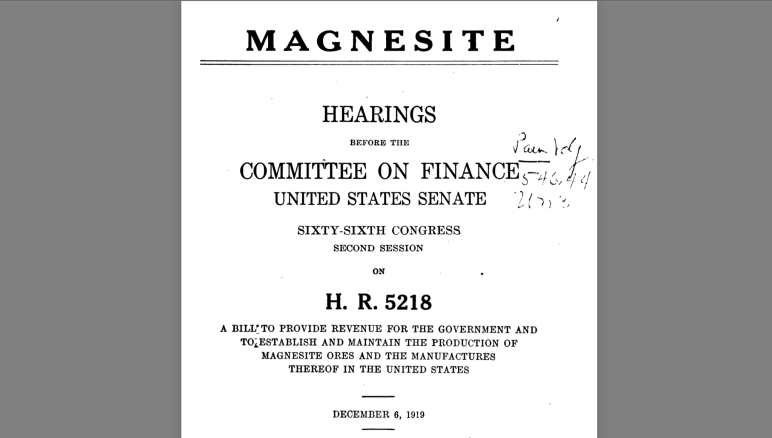
It was Arthur Richards, Wright's partner-developer from 1916-1917, who decided to cover the American System-Built Homes (ASBH) in Magnesite pebbles, not Frank Lloyd Wright. And where does one get Magnesite before 1917?

I dropped the Fibonacci spiral on Wright's floor-plan for our house. To my amazement, the focus of the spiral - the balanced center of the nautilus - falls perfectly in front of the hearth, marking the most important place in this space.
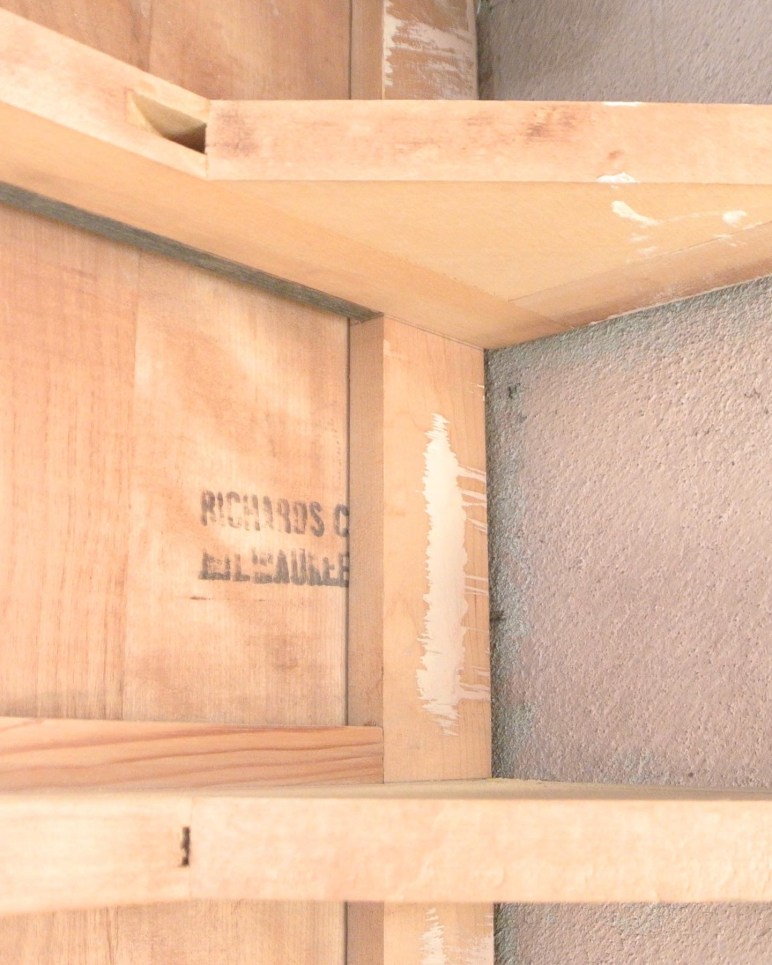
Frank Lloyd Wright didn't tell the carpenter exactly how to craft an American System-Built cabinet so often the carpenter improvised.

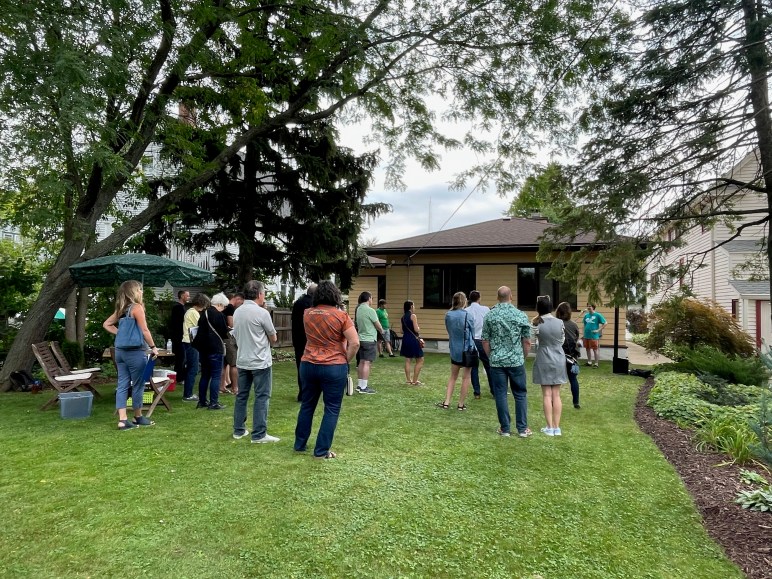
Thanks to host Heather Sabin of Monona Terrace's Wright Design Series and Brian Hannan of event-sponsor Wright in Wisconsin, we are able to bring you this recorded presentation and tour of the Elizabeth Murphy House - Frank Lloyd Wright's Forgotten House.
Though Wright designed over a hundred modest American System-Built Homes he quickly cancelled the program with only twenty or so built and filed away the drawings forever when he realized that his art would not be preserved if its occupants didn't themselves participate in the preservation.
If you had created something, a piece of art, for example, that was subsequently altered by others in ways that you disapproved, would you want that object preserved?

Did Frank Lloyd Wright plan to furnish his American System-Built Homes? Evidence suggests that limited studio resources left most owners to their own decorative devices.

Matthew Smith - an expert in fine leaded art glass - points out that Frank Lloyd Wright's motif in the Elizabeth Murphy House reflects the proportions of the Elizabeth Murphy House herself.

Wright and Richards were exploring ways to ensure quality while lowering costs in the American System. So cabinet doors were built of "ply" fifteen years before "plywood" became a thing.

